
We strive for a pregnancy, birth or abortion, and postpartum experience that is filled with dignity, that is grounded in autonomy, and that uplifts individual or parenting goals. We are committed to dismantling structural racism and challenging the stigma and discrimination that drive Team Lily clients’ barriers to care, health, and well-being.
Team Lily Offers
- Flexible appointments, meeting the needs of individual clients, off-site visits
- Easy access to team members via phone and text
- Pregnancy counseling - abortion, adoption, and pregnancy continuation
- Pregnancy & postpartum care
- Mental health services
- Addiction services including buprenorphine / suboxone treatment
- Navigation & case management to assist with access to housing and other resources
- Support around navigating CPS and CPS reunification
Team Lily Family Clinic (Team Lily FHC)
Team Lily Family Clinic (Team Lily FHC) is a family-centered primary care and addiction medicine clinic dedicated to supporting families impacted by substance use disorders. Our clinic was created as an extension of Team Lily, recognizing the need to continue the wraparound, multidisciplinary care that Team Lily provides beyond pregnancy.
We offer flexible, comprehensive medical services, including pregnancy and postpartum care, addiction medicine, pediatric care, primary care for individuals of all ages, and social work and navigation support.
Resources
- Are you using drugs while pregnant?
- Worried about Child Protective Services (CPS)?
- Unhoused in San Francisco?
Team Lily is here for you! We offer walk in appointments, help with transportation, support navigating housing resources in San Francisco, mental health services, substance use treatment (SUD) treatment, pregnancy care, and abortion care.
Referrals and general questions can be directed to Rebecca (Becca) Schwartz. She is available Monday-Friday from 9-5, (excluding holidays). You can call or text her at 415-802-7615. She can be reached by e-mail at [email protected].
Patient Resources:
- Pregnancy and Substance Use: A Harm Reduction Toolkit-https://harmreduction.org/issues/pregnancy-and-substance-use-a-harm-redu...
Here are three ways you can begin to care for your baby
You are your baby’s biggest comfort to get through withdrawal. How will my baby react to withdrawal? After birth, your baby will no longer be getting the opioid in your blood supply. This may cause your baby to have withdrawal symptoms that may affect eating, sleeping and fussiness.
Caring for your baby in the neonatal intensive care unit (NICU) Our nursery team will be checking in on your baby every few hours for signs of withdrawal. You can remind doctors and nurses to check your baby when he/she is awake and come back later if your baby is sleeping. Even if you are doing all you can to keep your baby comfortable, your baby may still need medication and stay in the nursery for additional care. You are welcome to spend as much time as you like in the nursery with them to provide comfort
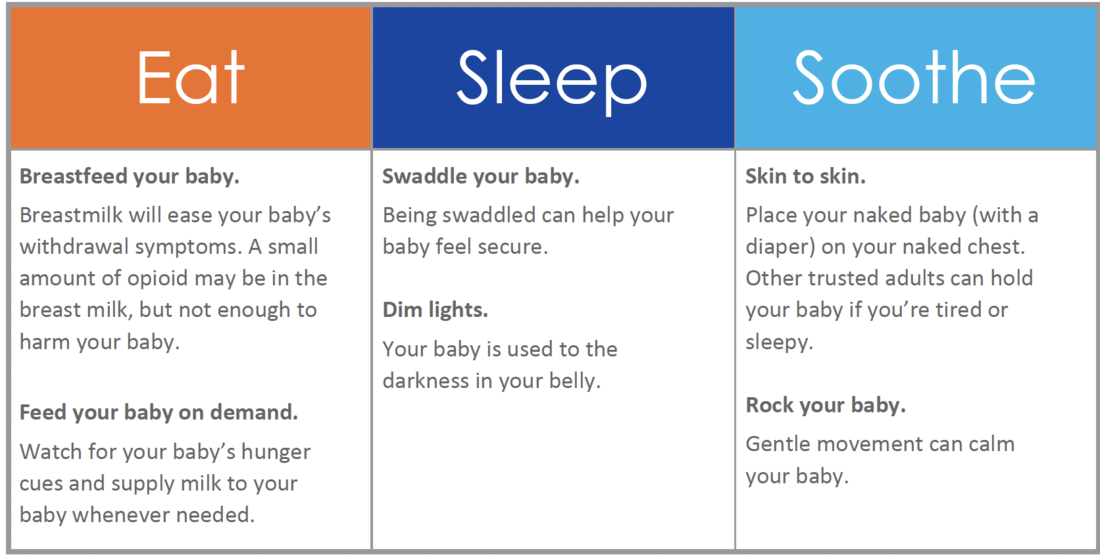
EAT:
- Breastfeed your baby. Breastmilk will ease your baby’s withdrawal symptoms. A small amount of opioid may be in the breast milk, but not enough to harm your baby.
- Feed your baby on demand. Watch for your baby’s hunger cues and supply milk to your baby whenever needed.
SLEEP:
- Swaddle your baby. Being swaddled can help your baby feel secure.
- Dim lights. Your baby is used to the darkness in your belly.
SOOTHE:
- Skin to skin: Place your naked baby (with a diaper) on your naked chest. Other trusted adults can hold your baby if you’re tired or sleepy.
- Rock your baby: Gentle movement can calm your baby.
Guide to accurate and compassionate communications on drug and alcohol use during pregnancy (version includes sample messaging)
- In-depth resource: https://bit.ly/BixbyCommsGuide
- 1-page quick reference guide: https://bit.ly/MessagingChecklist
Referrals and general questions related to existing patients can be directed to Rebecca Schwartz. She is available Monday-Friday from 9-5, (excluding holidays). You can call or text her at 415-802-7615. She can be reached by e-mail at [email protected].
Clinical questions can be directed to Dominika Seidman. She can be reached by email at [email protected].
Street stabilization referrals can be directed to Dana Lazarovitz 415.920.3543
Programmatic questions & donations inquiries can be directed to Program Manager Cynthia Gutierrez. She can be reached by email at [email protected].
If you would like to make a donation to Team Lily, you can go to the following University of California San Francisco Foundation page.
Team Lily Video


